Lessons I’ve Learned – pt. 2
My last newsletter focused on the writing side of creating a children’s book. Here I’ll look more closely at what it takes to illustrate a book where the pictures matter more than the words. As someone who has no professional training in book illustration, I can honestly tell you it was challenging. The process was long and messy; sometimes fun and other times quite tedious. Now that I’ve completed the illustration process, I can honestly say it was all worth it. Seeing my creative vision come to life on the pages of my book is a dream come true for me. Below are a few of the things I learned throughout the process.
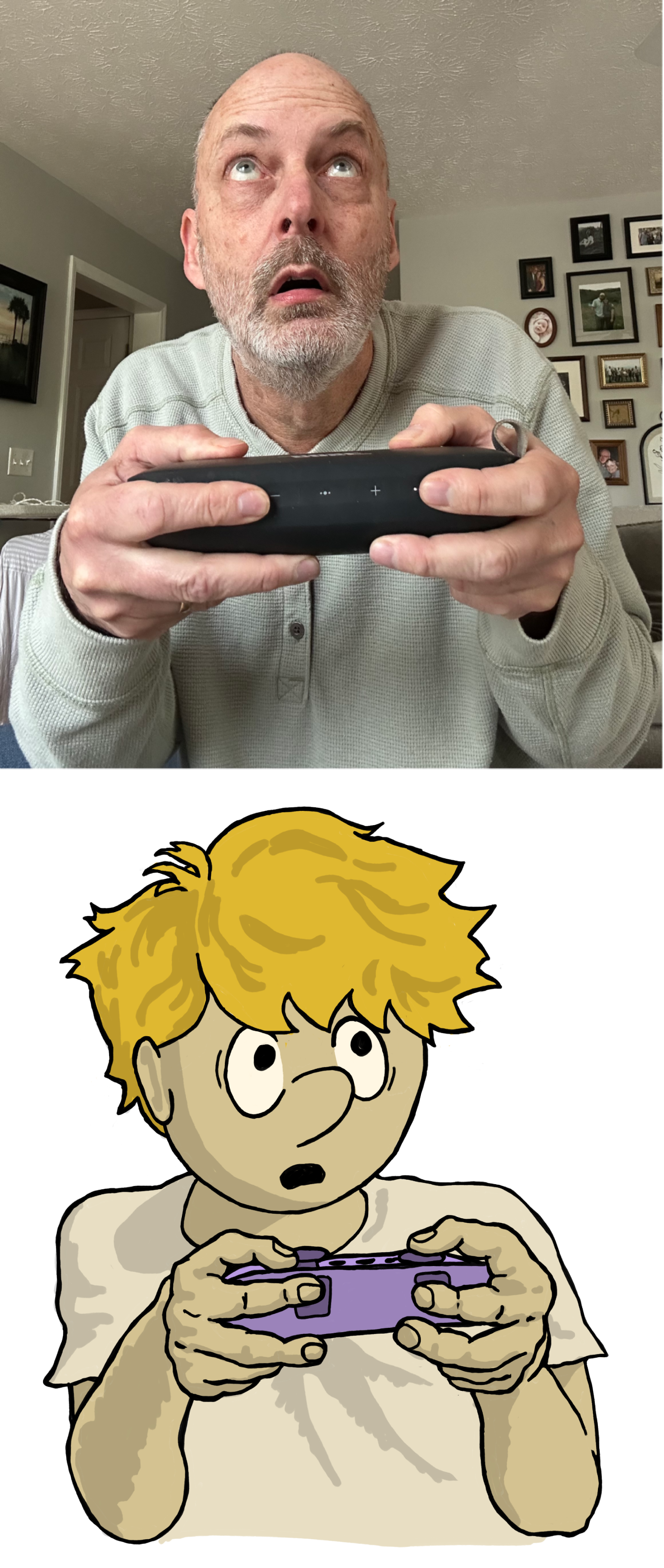
- When I need to figure out how to draw a human pose, I am my best model. . . . . I actually learned to do this back when I was working on Glazed Man & Rat Girl, but it remains a mainstay in my personal drawing routine. Almost every illustration I draw has my characters in difficult poses, many that I have never drawn before. That means I can either do my best to guess how their arms, fingers, and faces should look, and end up with them looking like aliens from another planet. Or I can look at someone else posed in the position that I’m looking for. Before cell phones and the internet, artists would have a friend pose and then draw them, or maybe they would use a mirror to draw themselves. But what has always worked for me, 100% of the time, is to take a picture of myself doing the pose I need. Then I’ll use my picture to draw my character doing the same thing. You might think that would never work because I’m a tall older white man and my characters are goofy superheroes, rats, dogs, and young children. But somehow it works. I guess my imagination fills in the character details that need to be added as I draw the pose. Below is an example of what I mean. This is a picture I used for The No Fun Day.
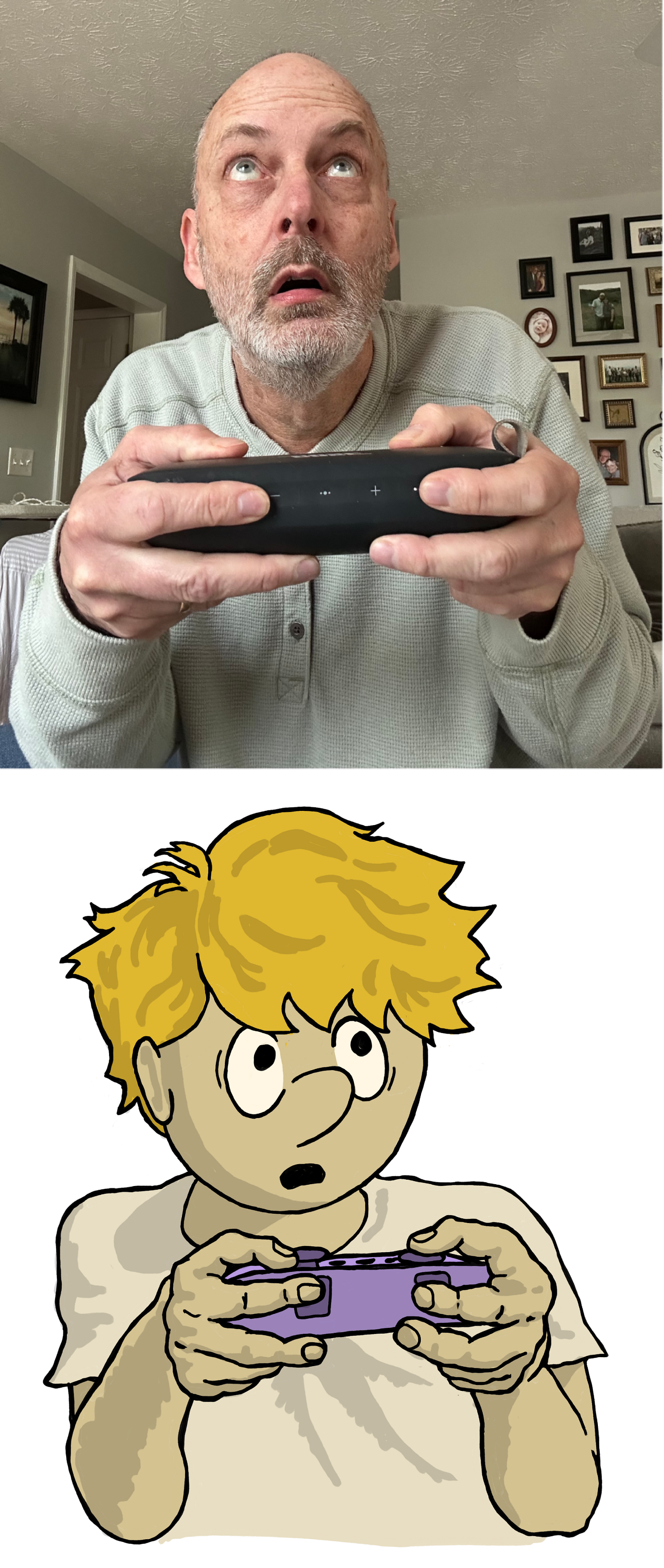 The main thing I needed from this photo was the positioning of the fingers. Hands are always a challenge. It also showed me the angle of my arms and face. When I’m in the middle of illustrating a book, my phone is filled with hundreds of these kinds of awkward pictures of myself. If anyone ever found my phone and strolled through my pictures, they’d think I was a lunatic and call the police to have me locked away.
 - My pictures don’t have to fill the page . . . . This is a lesson I really didn’t get until I got my first proof copy of The No Fun Day in the mail. When I designed the pages digitally, I was in the mindset of filling my pages to make them more interesting. But when I flipped through the physical pages of my book, it became clear to me that I needed to reduce the size of most of my illustrations to allow some white space around them on the page. The why on this is hard to explain, but I think it has something to do with the fact that blank space on a page, around an illustration, makes the page more appealing to our eyes.
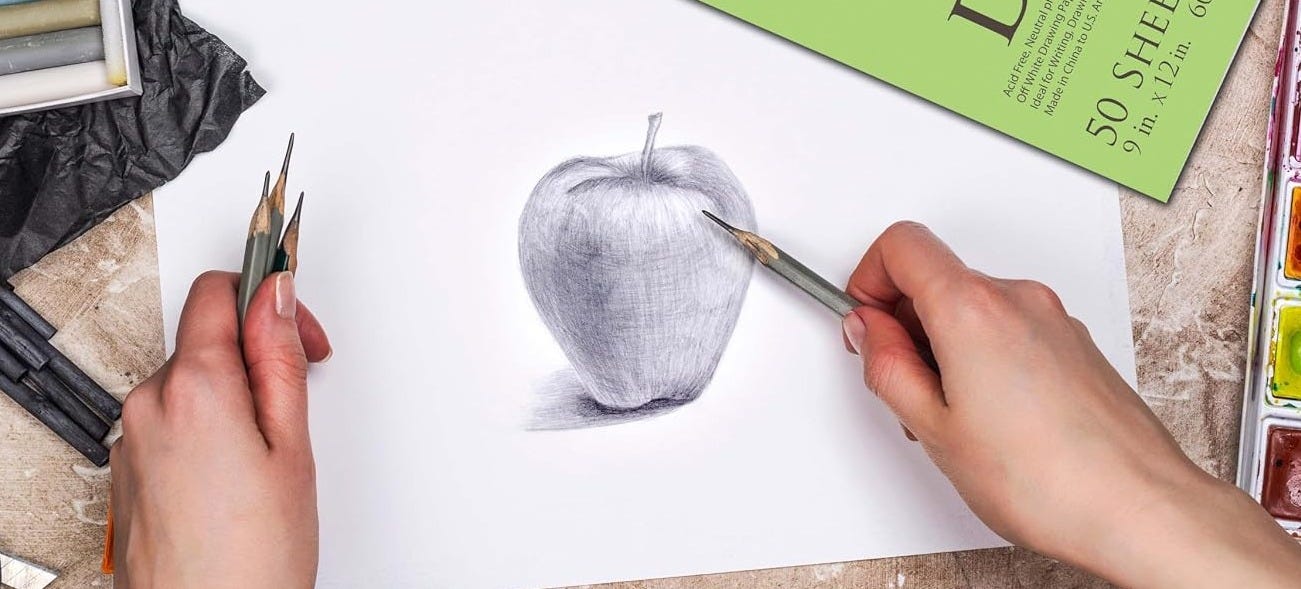
- Quality matters when it comes to paper and color . . . . For my first attempt at printing my book, I selected the lowest quality of paper and color. I was pretty sure I wouldn’t like the way they looked in my printed book, but I had to know for the sake of saving money on the cost of each book. When I received the proof copy in the mail, my suspicions were confirmed. As soon as I touched the first page, I could feel that it was too thin. It felt cheap. Even worse, I could see through the pages slightly, which meant the illustration on the flip side was showing through. Not good for any book that has illustrations. From then on, I selected a higher quality of paper for my children’s book. The same thing happened with color. To save money, I chose the lowest color quality on my first proof of the book. The colors came out looking too dull. Definitely not at the quality I’d envisioned. Again, I decided it was worth the extra printing cost to get the bright colors that I wanted.
- Illustrations Should Communicate More Than the Words. . . . This one is pretty obvious since we’re talking about a children’s picture book. But the specific lesson that I learned is that the more I can communicate in my pictures, the less that needs to be said in the text. An example of this is when I introduced a funny looking alien character in my new book. In text, I only said, “He was tall and lumpy and smelled like a meatball sandwich.” I felt no need to explain how wide his tummy was, or what kinds of clothes he wore, or even the color of his alien skin. I let the pictures do all of that. Instead, I used my text to get a laugh by saying he smelled like a meatball sandwich.
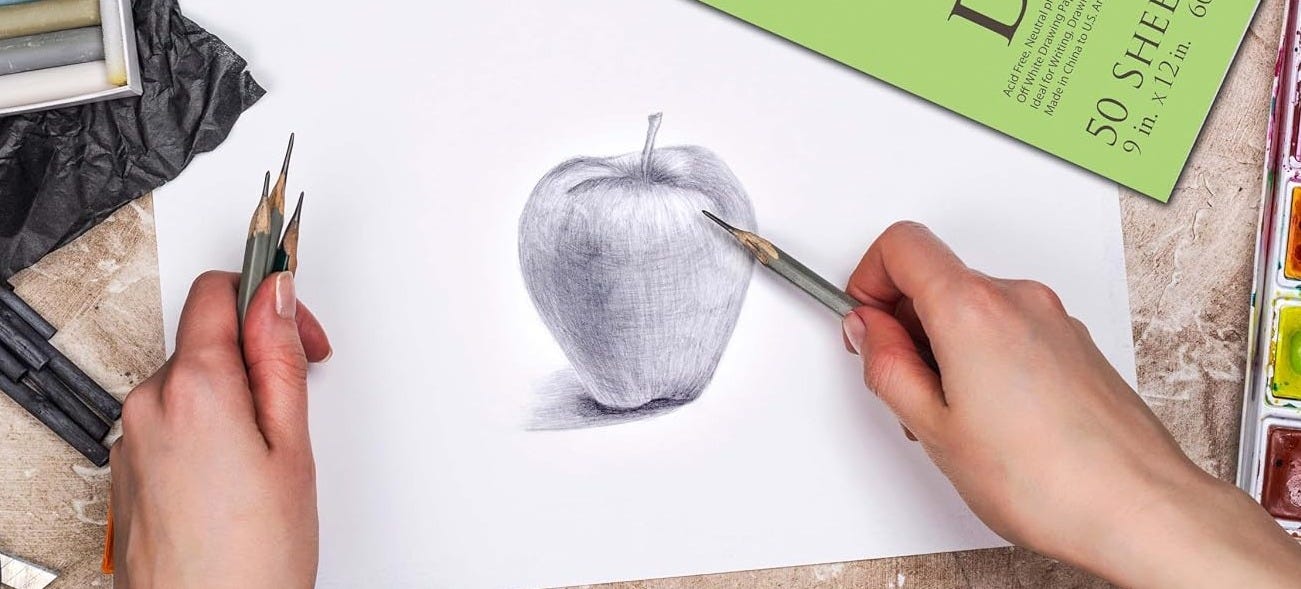
- Every artist must figure out their own creative process . . . . There are many digital art software programs to choose from. Plus physical ways of creating on paper are still an option. Using paper, pencils, and other tools often costs less money and is more satisfying in many ways. No two artists will do things the same way. For me, I had plenty of experience doing black & white cartoon-ish illustrations for my Glazed Man & Rat Girl books. This time, however, I knew I had to add color. The other thing was that I had to assemble all of my pages in a professional way to create a finished picture book. MS Word or Apple Pages would not be good enough this time. I did lots of research and software tests. After several stops and starts, I found my process, which I’ll list below. At first, it was slow going, but with each illustration that I created, I got faster. By the time I got to doing the finishing touches of my book, I felt like the whole process was second nature.Here is my process . . . Rough pencil sketches on paper – Lines, colors, shadowing in Procreate – Final touches in Photopea – Book assembled in Adobe InDesign.
Book Update
Concerning the publication of my new book, The No Fun Day, I’m still working on finding the right way to print it with a couple of online printers. I believe I’m very close to finding what works. Currently, I’m waiting on a third book proof to come in the mail. I’m fairly certain this will be the last one, but I can’t say for sure until I hold the book in my hands and study it with my own eyes. I’ll keep you all updated.

